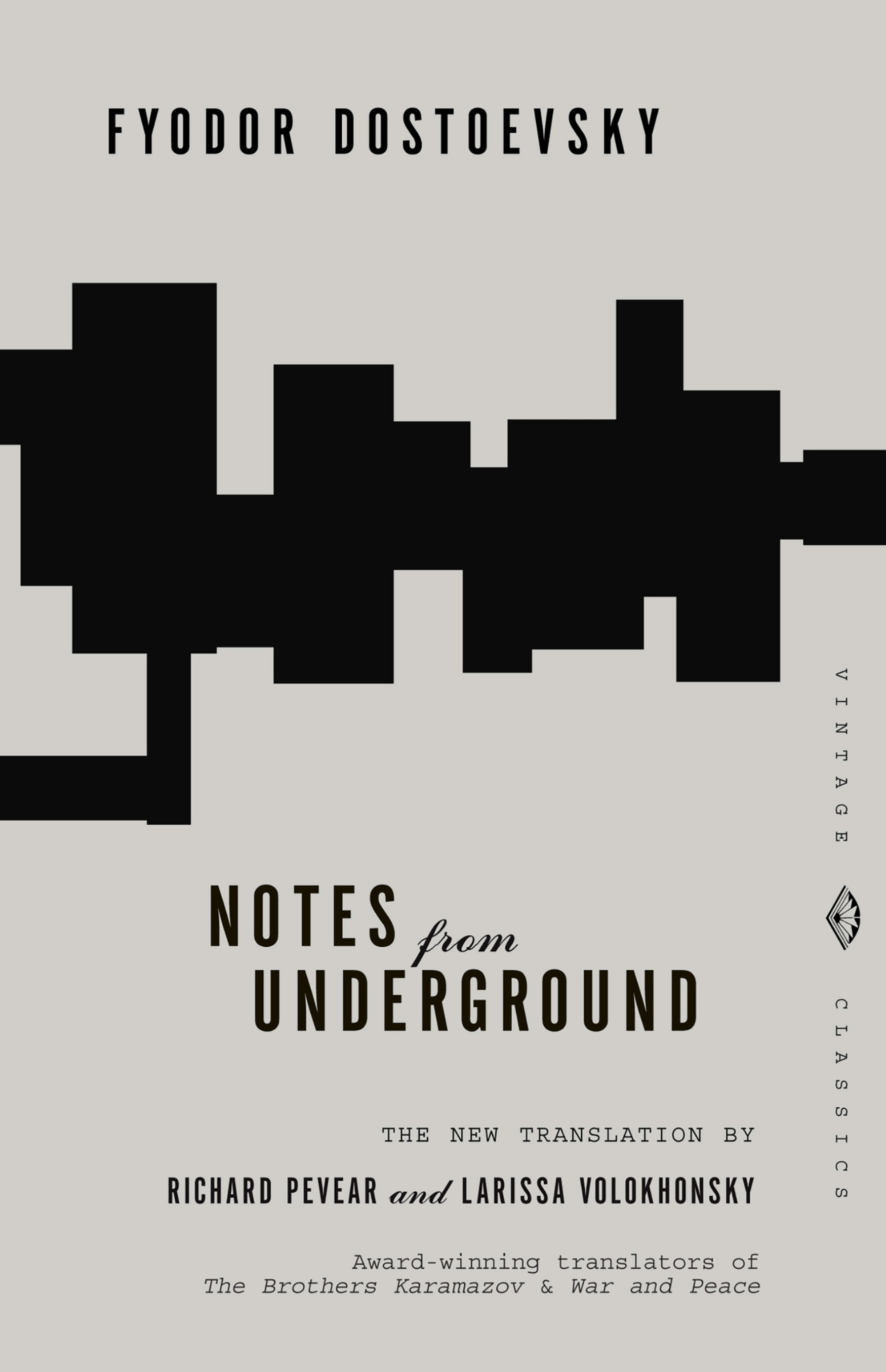
Title: Notes from Underground
Author: Fyodor Dostoevsky (translated by Richard Pevear and Larissa Volokhonsky)
My Rating: 5
Genre: Fiction
Category: Novel
Published: 1864, Reprint: August 20, 1994
Format: eBook
Date Started: August 5, 2026
Date finished: August 24, 2026
Summary:
A retired civil servant in his forties lives in a shabby flat in St. Petersburg and writes down his thoughts for no one in particular. He calls himself a sick man, a spiteful man, and then spends the first half of the book arguing with an imaginary audience. His target is the idea that people are rational, and that if you showed everyone what was truly good for them, they’d choose it. He says no: people will act against their own interest just to prove they’re free.
The second half, “Apropos of the Wet Snow,” goes back twenty years and shows him in action. He wages a long, silent war against an officer who once moved him aside like he wasn’t there. He invites himself to a farewell dinner with old schoolmates who don’t want him, and they don’t even tell him the time has changed. And afterward he meets Liza, a young woman in a brothel, and gives her a speech that turns out to matter more to her than it did to him.
My Thoughts:
I enjoyed this one. The narrator has a strong personality and very strong opinions about life and about people, and he never stops sharing them. Half the time I agreed with him. The other half I was thinking, this man is weird.
The officer situation is where he lost me, but in an interesting way. I can’t figure out what his problem with that man was. If it were me, I’d just talk to him. If I was curious about someone, I’d make conversation. Honestly, if I’d been there, I’d have walked him right up to the officer and said, “Excuse me, Officer. This guy has a question for you.” Instead he spends years planning how to bump into him on the street. It’s a little crazy, if you ask me.
What surprised me is how much of Part One I highlighted. He says that people love building roads but also love destruction and chaos, maybe because they’re afraid of finishing what they started. He says reason is fine, but it only satisfies the reasoning part of us, while wanting is the whole of life.
In Part Two, it’s Liza who gets one of the best lines in the book: “And with love one can live even without happiness.” I don’t fully agree with her. I think you need both, and that it takes love in return to truly be happy. That’s what makes the ending hurt. Love shows up at his door, and he can’t take it. I don’t think he’s incapable of being happy. I think he’s afraid of it. He’d rather stay miserable. People can take their love away, or at least make you feel like they have. Nobody can take your misery but you.
I read the Pevear and Volokhonsky translation, and in small pieces most mornings, because there’s a lot to take in.
Here are a few of my favorite lines:
- “Man needs only independent wanting, whatever this independence may cost and wherever it may lead.”
- “Two times two will be four even without my will.”
- “Reading was, of course, a great help—it stirred, delighted, and tormented me. But at times it bored me terribly.”
Recommended for:
Readers who like classics with a strong, difficult narrator, and anyone who enjoys books that argue with you. Good for a book club if your group likes to talk. Not for readers who need a likable main character.
/// Listening to: ///
‘Mt. Fuji 7:15PM’ by Andy Leech
Discover more from From My Corner of the Universe
Subscribe to get the latest posts sent to your email.


Leave a Reply